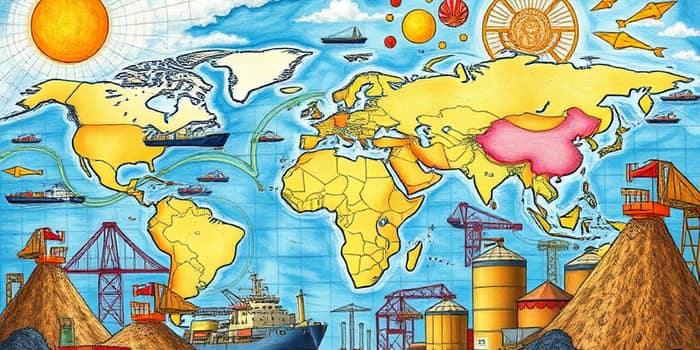
As 2025 unfolds, the intersection of global supply chains and commodity pricing reveals a landscape of tension, opportunity, and uncertainty. Companies and investors confront volatile markets shaped by geopolitical skirmishes, climate shocks, and policy upheavals. Navigating these crossroads demands both insight and resilience.
Worldwide logistics networks have never been more interconnected—or more vulnerable. While the pandemic forced a reckoning in procurement strategies, the months since have introduced new challenges. From cyber-attacks targeting shipping manifests to regional unrest disrupting port operations, firms face a constant barrage of hazards.
Key risk factors include:
These drivers combine to slow lead times, spike freight rates, and force rerouting—often at significant cost. In 2024, 76% of European shippers reported at least one major disruption, while one-third struggled to source critical materials.
Amid these logistical headaches, commodity prices are displaying a striking duality. Energy and agricultural prices are falling, yet safe-haven metals are soaring. Understanding this divergence is essential for supply chain managers and investors alike.
Major forecasts for 2025–26 include:
Oil markets face a 65% surplus above the 2020 high, driving Brent toward a five-year low. Agricultural staples benefit from record harvests—Brazil’s soybean yield, for instance, has pushed stocks-to-use ratios to a 17-year peak. Yet fertilizer costs surge, trimming farmer margins and raising questions about future output.
Conversely, gold and silver rally as central banks hoard bullion and investors seek refuge from ongoing volatility. This bifurcation underscores the delicate balance between supply gluts and risk-driven demand.
Governments worldwide are rewriting the rules of engagement. Tariffs, embargoes, and protectionist measures have fractured what was once a steadily deepening web of trade.
These policy shocks reverberate through procurement costs, inventory strategies, and long-term capital planning. Firms that fail to anticipate sudden tariff escalations risk painful margin erosion.
Amid the fray, technology emerges as both an enabler and a source of new vulnerabilities. Artificial intelligence powers advanced demand forecasting and automated sourcing, but uneven adoption leaves gaps that can be exploited.
Leading organizations deploy:
Yet technology alone is not a panacea. Firms must cultivate agility—preparing alternate suppliers, regional warehousing nodes, and flexible contract terms to absorb shocks without derailing production.
In an environment defined by instability, proactive planning is the key to seizing opportunities and avoiding pitfalls. Consider these actionable strategies:
For investors, the contrasting trajectories of commodities offer dual pathways. Those confident in economic recovery may capitalize on low energy and food prices, while risk-averse portfolios should maintain exposure to precious metals as an inflation hedge.
Global commodity markets in late 2025 stand at a crossroads. Will continued deglobalization and policy brinksmanship deepen price volatility, or will improved climate resilience and diplomatic openings restore equilibrium? The balance will hinge on OPEC+ output decisions, the pace of electrification, and the emergence of new trade corridors.
Companies that embrace agile decision-making frameworks, bolster digital defenses, and engage in continuous scenario planning will be best positioned to thrive. Similarly, investors who blend tactical commodity allocations with long-term metal holdings can navigate the ups and downs with greater confidence.
In this fluid landscape, one thing is clear: supply chains remain the linchpin of global economic stability, and their evolution will shape price dynamics for years to come.
At the commodity crossroads, the most successful players will be those who anticipate change, manage risk with precision, and adapt with speed.
References