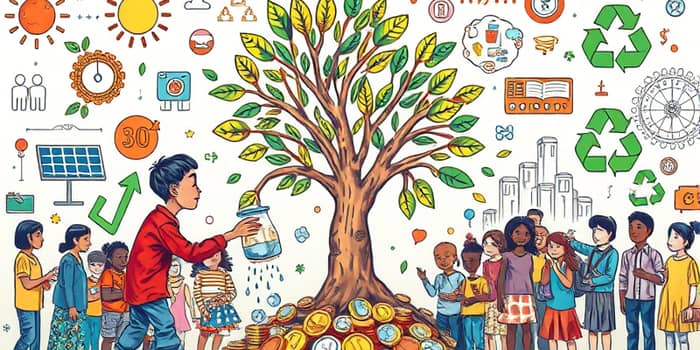
Ethical investing represents a powerful way to put your money behind causes you believe in. By choosing investments that reflect your values, you not only seek financial returns but also contribute to a more sustainable and just world. For beginners, the journey may seem complex, yet with a clear roadmap, anyone can start building a responsible portfolio.
This guide will walk you through core definitions, actionable strategies, practical tips, and common pitfalls. You will learn how to select investments that resonate with your principles and track meaningful impact alongside market performance. Whether you have $50 or $5,000 to invest, it is possible to adapt your plan as your values evolve.
Demand for ethical investments is growing rapidly, with over $35 trillion in ESG assets globally as of 2023. Investors are motivated by a desire to align personal values with growth, combat climate change, and drive social justice. Far from a niche trend, evidence shows that many sustainable funds now compete with or exceed traditional benchmarks, offering both purpose and performance.
Before diving in, it is essential to grasp key frameworks driving ethical investing. Environmental, Social, and Governance (ESG) ratings assess companies on their stewardship of the planet, social responsibility, and leadership structures. Socially Responsible Investing (SRI) filters portfolios based on ethical screens, avoiding industries like tobacco or weapons. Meanwhile, impact investing channels capital toward projects with measurable positive social or environmental outcomes.
Terminology can overlap. Sustainable investing places long-term environmental and social considerations at the core, while greenwashing remains a risk. Greenwashing occurs when funds overstate their ethical credentials, making due diligence and third-party validation critical.
The first step is to clarify what matters most to you. Begin by listing causes and values that resonate deeply—climate action, human rights, or gender equity. Then refine your approach:
By creating a simple checklist, you will maintain consistency in all investment decisions. This personalized filter will guide research and prevent emotional divergences when markets fluctuate.
Beginners have multiple paths to begin ethical investing. Each vehicle offers unique benefits and considerations:
Select vehicles that match your risk tolerance, budget, and desire for control. For most beginners, ESG ETFs represent a balanced blend of accessibility and responsible selection.
Not all ethical claims are genuine. To ensure authenticity, inspect the methodologies behind funds and companies. Look for transparent reporting on metrics such as carbon emissions avoided, renewable energy capacity, or community development results. Seek third-party ESG ratings for clarity from reputable agencies like MSCI or Sustainalytics.
Review annual and impact reports, focusing on how the fund manager defines exclusions and positive investments. If the documentation is vague or the fund charges high fees without delivering proof, consider it a red flag. Vigilance will protect your values and your returns.
Despite myths, ethical investing often matches or outperforms conventional portfolios over the long term. As of 2023, global ESG assets surpassed $35 trillion, reflecting strong investor confidence. Around 60% of sustainable funds outperformed their traditional peers in recent years, according to Morningstar data.
However, omitting entire sectors, like fossil fuels during energy price spikes, can lead to short-term underperformance. Diversification across industries and regions helps mitigate such risks. Remember that no investment is flawless; prioritize funds with clear improvement plans rather than perfection.
Putting your plan into action can be straightforward:
By automating contributions and setting reminders, you build consistency and avoid emotional timing errors.
These examples can be adapted to your budget. You can start with as little as $50 to buy fractional shares in ETFs or increase gradually as you gain confidence.
Ethical investing is not a one-time effort. Over time, your values and the market landscape may shift. Schedule a biannual review to:
Staying informed through newsletters, ethical investment forums, and annual sustainability reports will deepen your understanding and help you refine your approach.
Building a values-oriented portfolio is a fulfilling journey that goes beyond financial gain. By integrating clear ethical criteria, choosing transparent vehicles, and vigilantly avoiding greenwashing, you can ensure your investments reflect your principles. Over time, small, consistent actions will grow into significant impact, demonstrating that profit and purpose can thrive together in a single portfolio.
References