The BRICS alliance has transformed from a four-member acronym into a sprawling bloc that now shapes more than half of humanity’s future. As this coalition expands, so does the concept of emerging markets, inviting investors, policymakers, and citizens to engage with a multipolar world in unprecedented ways.
Originally established in 2006 by Brazil, Russia, India, and China, and joined by South Africa in 2010, BRICS has long represented hope for a more balanced world order. Between 2023 and mid-2025, the bloc invited Egypt, Ethiopia, Iran, the UAE, and Indonesia to full membership. Over 30 nations have applied, hoping to share in its growing influence.
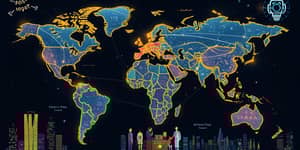
This expanding Global South coalition now spans 10 official members and 10 partner states, reflecting a shift from Western-centric governance toward a more inclusive approach. For the first time, Southeast Asia’s largest economy and key Middle Eastern states stand shoulder to shoulder with African giants.
By mid-2025, the combined population of BRICS and partners represented a staggering 56% of the world’s inhabitants. China and India alone contribute nearly 2.8 billion people, while Indonesia, Nigeria, and Vietnam add further demographic heft.
Majority of world population now lies within this sphere, offering unparalleled market opportunities. However, significant diversity in wealth and development demands nuanced strategies for engagement.
This bloc now accounts for 44% of global GDP (PPP), yet its members exhibit diverse economic and development profiles. Investors and partners must calibrate expectations to each country’s specific strengths and challenges.
Beyond raw numbers, BRICS expansion serves profound geopolitical aims. It promotes multipolarity, challenges Western-dominated institutions, and amplifies the collective voice of the Global South. Energy-rich Gulf states and resource-abundant African nations bolster the group’s strategic reserves.
These motives drive new infrastructure financing, technology partnerships, and trade agreements. As corridors of commerce shift southward, businesses should track emerging routes from Asia to Africa and Latin America.
The New Development Bank (NDB) has expanded alongside membership, with Algeria joining in 2025. Discussion around de-dollarization persists, as countries explore potential use of local currencies for intra-bloc trade.
Partner status, introduced in 2024, offers a flexible integration model that accommodates countries unwilling or unable to assume full membership obligations. This tiered structure may prove a blueprint for other alliances.
While BRICS+ garners headlines, countless dynamic economies remain outside its umbrella. Mexico, the Philippines, and Turkey continue to offer robust growth prospects. Regional powerhouses like Malaysia, Kazakhstan, and Nigeria, along with high-potential markets in Vietnam and Uzbekistan, illustrate the vast tapestry of emerging opportunities.
For global investors, mapping these overlapping networks of trade agreements, technology hubs, and resource corridors is essential. Engaging with local chambers of commerce, leveraging bilateral agreements, and diversifying across subregions can mitigate risks.
Despite its size, BRICS+ faces hurdles. Consensus-based decision making slows action. Widely varying political systems and priorities can hinder unified responses to crises, from climate policy to regional conflicts.
Critics question whether demographic and economic weight can translate into cohesive leadership within institutions like the IMF or UN. Furthermore, partial commitment from some partners, such as Saudi Arabia’s hesitation, highlights variable integration levels.
Businesses, investors, and policymakers must adopt a proactive approach to harness BRICS+ and emerging market potential. Consider these actionable steps:
By embedding these tactics, stakeholders can transform uncertainty into opportunity and support sustainable, inclusive growth across diverse markets.
As BRICS evolves into a broad coalition, its success hinges on balancing unity with diversity. Will this partnership become a credible counterweight to the G7 or G20? Can it drive progress on green energy, digitalization, and supply chain resilience?
Emerging markets beyond BRICS will also play a critical role. Their trajectories will intersect with the bloc’s initiatives, forging new corridors of growth and innovation. The interplay between size, cohesion, and vision will determine whether this alliance shapes the 21st-century global order.
In the face of rapid change, one thing is clear: the horizons for emerging markets have never been broader. By understanding the evolving landscape, embracing cooperative frameworks, and applying practical strategies, stakeholders can navigate complexity and contribute to a more balanced and prosperous world.
References