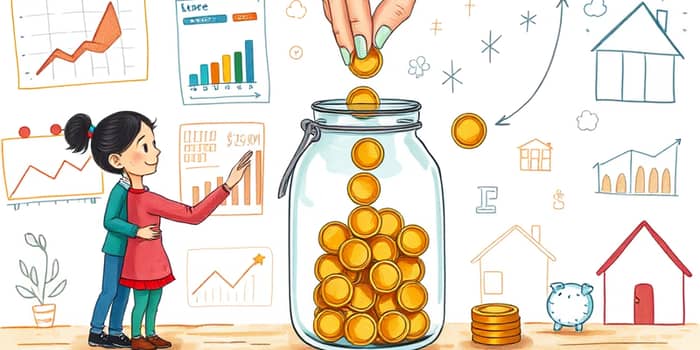
Embarking on the journey to homeownership can feel overwhelming, but with a clear plan and solid knowledge, you can transform your dreams into reality. This guide dives deep into the data, strategies, and inspiration you need to confidently plan your savings journey.
Before you start stashing cash, it’s essential to know what you’re aiming for. In 2025, homebuyers nationwide typically put down between 14.4% and 18% of purchase price, with a median down payment of $62,000 according to July data. First-time buyers tend to contribute less—around 9–10% (median $35,721)—while repeat buyers average a 23% down payment (median $91,287).
Down payment requirements can range dramatically, from 0% on VA or USDA loans to 20% or more for conventional financing. Understanding your target percentage will guide your savings goal and loan selection.
Choosing the right loan program can lower your initial outlay. Compare the common options below:
Location dramatically affects the dollar amount you need. In California, the median is $96,100 (18.5%), whereas Mississippi buyers average just $6,112 (9.3%). The Northeast leads at $62,900, the West at $51,000, and the Midwest trails at $27,900.
For example, a $350,000 home in Florida typically requires 10–20% down ($35,000), while in high-demand metros these percentages climb even higher. Local market competitiveness drives down payment needs significantly.
Putting more money down can yield enormous benefits. A larger down payment reduces your mortgage balance, lowers monthly payments, and cuts total interest over the loan’s life. You may also eliminate private mortgage insurance (PMI) by hitting at least 20%.
Conversely, smaller down payments—accessible through government-backed loans like FHA—make homeownership more attainable but incur mortgage insurance costs. Strike a balance so you don’t drain your emergency fund.
If your savings fall short, assistance programs can bridge the gap. Many state and local governments, as well as nonprofits, offer grants or low-interest loans to:
Eligibility often depends on income limits and purchase price caps. Research your area’s offerings to uncover hidden funding opportunities.
Building a robust down payment fund requires discipline and creative strategies. Try these approaches:
Don’t forget alternative funding sources like family gifts, employer assistance, or cautious retirement plan loans. Calculate your monthly savings rate to estimate how long it will take to hit your target.
Homebuying entails costs beyond that initial lump sum. Plan for:
Before jumping in, conduct a rent-versus-buy analysis. Ensure you have adequate liquidity post-closing to weather unexpected repair bills or income fluctuations.
Lenders scrutinize your credit score, debt-to-income ratio, and employment history. Aim for a credit score of at least 680 to unlock competitive rates. Gather documentation of consistent income, bank statements, and tax returns to streamline your approval process.
A too-huge down payment could deplete your emergency fund, while too small a deposit increases monthly obligations. Preserve liquidity by maintaining a 3–6 month cash reserve after closing. Smart risk management ensures sustainable homeownership.
Saving for a down payment is more than just math—it’s a journey of perseverance, vision, and dedication. Picture the day you unlock your front door, keys in hand, knowing every dollar you saved made that moment possible.
By understanding national trends, local variations, and creative funding strategies, you’re armed with the knowledge to navigate this milestone. Embrace the process, celebrate each savings milestone, and remember that every incremental deposit brings you closer to planting roots in your dream home.
Your path to homeownership starts today—plan wisely, save diligently, and let ambition drive you forward.
References