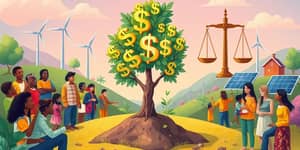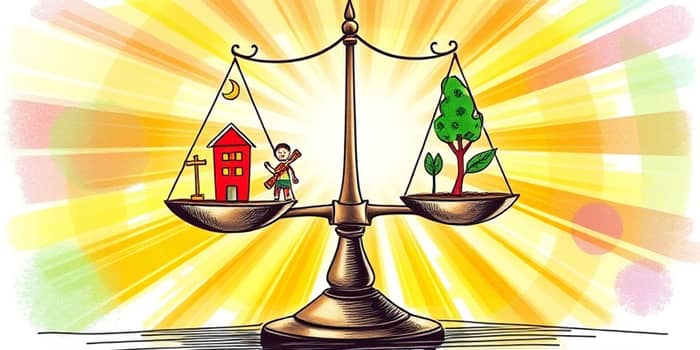
In today’s rapidly evolving world, measuring success solely by financial gain no longer suffices. Consumers, employees, and investors demand a more comprehensive approach that values community well-being and ecological health alongside economic performance. This shift has given rise to the Triple Bottom Line framework, reshaping how businesses define and achieve true prosperity.
Coined by John Elkington in 1994, the Triple Bottom Line challenges the traditional profit-only mindset. It urges organizations to consider deep stakeholder engagement and transparency at every decision point. By expanding the definition of performance to include social responsibility and environmental stewardship, TBL aims to create lasting value for all parties.
Elkington’s vision was simple yet profound: “to provide benefit to many constituencies and not to exploit or endanger any group of them.” Over time, this idea has become a cornerstone for businesses seeking to align purpose with profitability.
In the Triple Bottom Line model, profit extends beyond quarterly earnings. It encompasses the long-term viability over short-term profits and considers how economic activity affects wider society. By internalizing external costs and fostering responsible innovation, companies can generate financial returns while delivering communal benefits.
Research shows that organizations with robust sustainability credentials often outperform their peers. For example:
These statistics illustrate how integrating economic, social, and environmental goals can strengthen a company’s financial foundation. When stakeholders see tangible benefits, trust grows, and long-term prospects improve.
Consider Unilever’s Sustainable Living Plan, which has delivered over €1.2 billion in cost savings since 2008 through waste reduction and water efficiency. By aligning product innovation with social objectives, the conglomerate demonstrates how synergizing profit with societal good can reinforce economic strength. These initiatives underline that profit and purpose are not mutually exclusive, but rather mutually reinforcing when managed strategically.
The People pillar measures the social impacts of business operations. This spans employee welfare, supply chain ethics, customer safety, and broader community engagement. Prioritizing fair labor practices and inclusive policies fosters loyalty and boosts morale.
Key objectives include:
Leading brands demonstrate how ethical sourcing and community development can reinforce brand reputation. Ben & Jerry’s, for instance, publishes detailed social audits and integrates activism into its core identity, cultivating a loyal consumer base that values integrity.
Modern employees, especially millennials and Gen Z, expect employers to uphold strong social values and ethical labor standards and equitable opportunities. Companies that track DEI ratios, monitor staff turnover, and invest in training see up to 25% higher productivity. Engaged workforces act as brand ambassadors, amplifying messaging and driving innovation grounded in lived experience.
The Planet pillar focuses on mitigating harm to ecosystems and championing regenerative practices. From minimizing resource consumption to reducing greenhouse gas emissions, environmental stewardship is essential for a sustainable future.
Organizations set ambitious net zero targets, invest in renewable energy, and redesign products for circularity. Transparency in reporting carbon footprints and waste diversion rates drives accountability and continuous improvement.
These figures highlight progress across industries. By embedding minimizing environmental impact and waste into core strategies, firms lower operational costs and contribute to planetary health.
Global sustainable investment reached $35.3 trillion in 2020, reflecting the scale of capital directed toward ecological goals. Firms like Patagonia and IKEA have pioneered circular economy models, repairing and recycling materials to curb resource depletion. These examples illustrate collective action for environmental regeneration that inspires consumer trust and operational resilience.
Adopting the Triple Bottom Line requires a holistic strategy. Companies must embed sustainability goals into corporate governance, reporting, and everyday operations. This includes:
By driving innovative sustainability practices drive resilience, organizations build adaptive capacity to weather economic and environmental shocks. This multidisciplinary approach fosters a culture of continuous improvement and shared responsibility.
Patagonia’s “Don’t Buy This Jacket” campaign challenged consumption norms and saved costs by encouraging product repairs, ultimately strengthening customer loyalty. Brands that publish transparent TBL reports and pursue B Corp certification often attract premium talent and investment, showcasing that purpose-driven branding fosters sustainable growth in competitive markets.
Despite its appeal, the Triple Bottom Line faces hurdles. Quantifying social and environmental outcomes in monetary terms can be contentious and complex. Standardized metrics are still evolving, making comparisons across companies difficult.
Critics warn of greenwashing, where superficial initiatives mask deeper issues. Genuine commitment goes beyond reporting; it requires structural change in supply chains, product design, and stakeholder relations. Recent calls for measurable social and environmental outcomes emphasize the need for rigorous auditing and third-party verification.
John Elkington himself has warned that TBL risks becoming a checkbox exercise if firms pursue only surface-level compliance. To counter this, businesses can adopt innovative tools such as environmental digital twins and blockchain-based supply chain monitoring to ensure authentic accountability and verifiable impact across all operations.
As consumer expectations evolve, businesses must adapt or risk obsolescence. ESG investing channels trillions into firms that demonstrate real impact. Millennials and Gen Z prioritize employers with strong social and environmental commitments, fueling a new era of purpose-driven work.
Regulatory changes, such as the EU Corporate Sustainability Reporting Directive and proposed SEC rules, will mandate greater transparency. Embracing these standards early can confer competitive advantage and strengthen stakeholder trust.
Systems-based thinking unites all three pillars, acknowledging that improvements in one domain often reinforce progress in others. For example, energy-efficient processes reduce costs and lower emissions, benefiting both profit and planet.
Collaboration across sectors—public, private, and nonprofit—is critical to scale TBL efforts. By integrating systems-based solutions like regenerative agriculture, green logistics, and equitable financing models, leaders can foster integrated strategies for inclusive sustainability that drive transformational change.
Embracing this holistic vision invites organizations to pioneer new markets, enhance resilience, and create meaningful value for all stakeholders. When we deliberately measure success by profit, people, and planet, we unlock a powerful pathway toward a future where business and society flourish together.
Now is the moment for visionary leaders to champion the New Bottom Line. Commit to this transformative framework and join the growing movement that proves sustainable prosperity is not just possible, but imperative for generations to come.
References